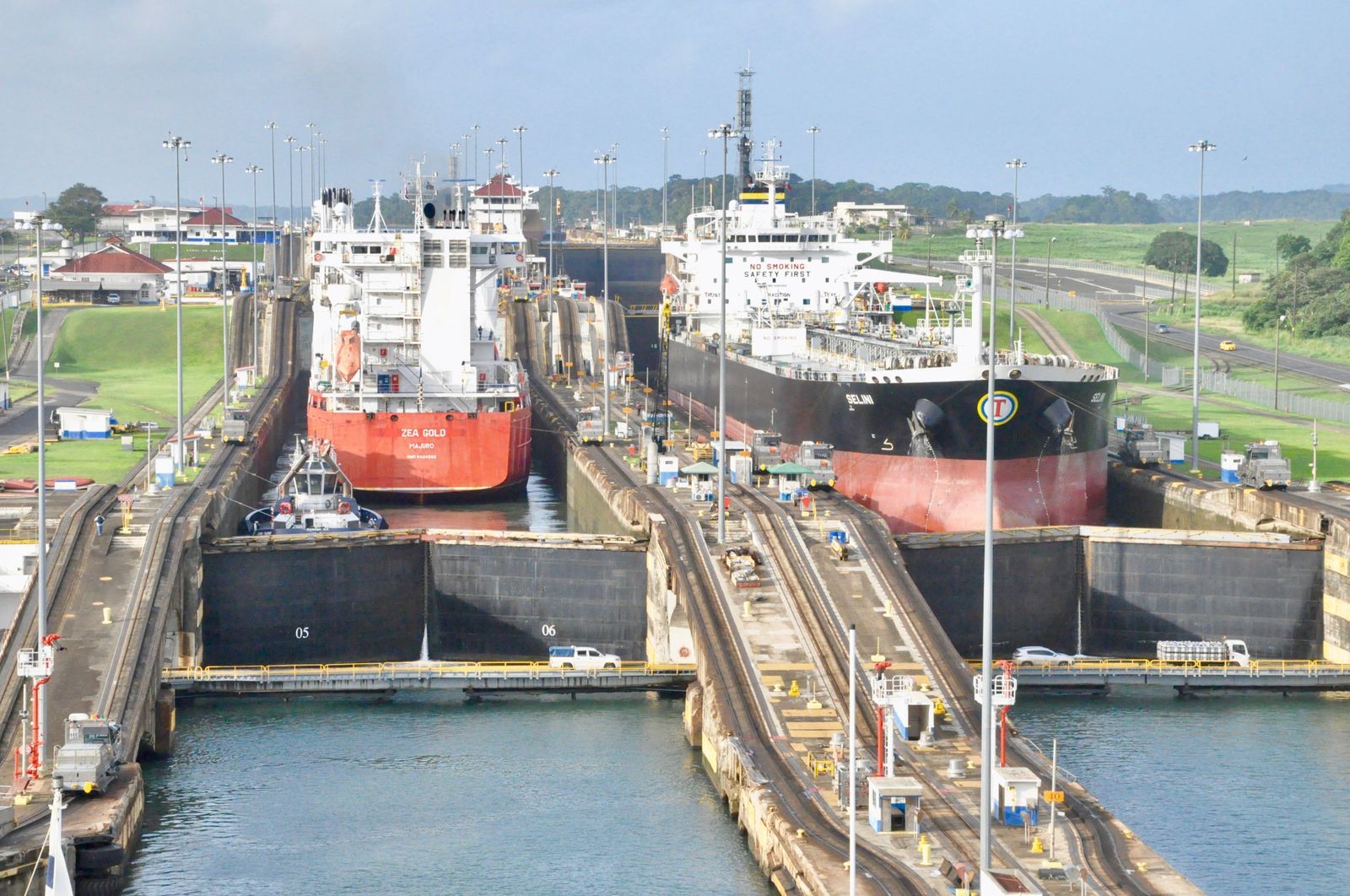
What the Panama Canal is
The Panama Canal is an 80-kilometer waterway joining the Atlantic and Pacific oceans across the isthmus. It crosses the Continental Divide thanks to a system of water steps: ships rise 26 meters up to Gatún Lake and then descend to sea level on the other side. A full transit takes 8 to 10 hours.
About 5% of world maritime trade passes through the Canal (the ACP has cited a range of 3% to 6% depending on the year and the type of cargo).
The lock system
Figures verified against the ACP (consulted October 12, 2026). One detail that usually confuses: the chambers’ dimensions are quoted two ways —the total structure and the usable space— and the difference matters when sizing a ship.
Panamax (original locks, from 1914)
- Gatún (Atlantic side): 3 chambers, lifts ships up to the lake.
- Pedro Miguel (Pacific side): 1 chamber, lowers ships by about 9 meters.
- Miraflores (Pacific side): 2 chambers at sea level. Between Gatún and Miraflores the rest of the 26-meter total elevation difference is covered.
- Chambers 305 m × 33.5 m of usable space; the total structure measures 320 × 33.53 m. Ships up to 294 m × 32.3 m of length and beam. Capacity: up to about 5,000 TEU (20-foot containers).
Neopanamax (Expanded Canal, 2016)
- Agua Clara (Atlantic side) and Cocolí (Pacific side): each with 3 levels, inaugurated on June 26, 2016 with the transit of the ship Cosco Shipping Panama.
- Chambers 427 m × 55 m × 18.3 m deep. The original ship standard was 366 × 49 m, but the ACP later raised the maximum length to 370.33 m with a beam of 51.25 m; that is the figure in force for the expanded canal.
- Capacity: more than 14,000 TEU. That was the class of the ships that inaugurated the expansion; today optimized container ships of up to 15,500 TEU transit regularly.
- They feature water-reuse basins that save up to 60% of the water of each lockage.
Tolls and reservations
- Ships pay tolls calculated by tonnage and cargo type; transits are scheduled by space reservation (slots) in advance.
- Ships have a scheduled transit hour and follow the order of the locks; that’s why transits are seen “in batches”.
History and figures you should know
- The steamer Ancón made the first official transit on August 15, 1914.
- It shortens the route between New York and San Francisco by about 7,872 miles — what a ship saves by crossing Panama instead of rounding Cape Horn.
- The Expanded Canal, opened in 2016, adds a third lane for the largest ships: Neopanamax significantly increased the original Canal’s capacity.
- The Third Locks Project uses 16 rolling gates: 8 on the Atlantic and 8 on the Pacific.
- A ship crossing the Canal pays its toll; the highest toll in history exceeds one million dollars.
How to experience it
- Watch a transit: visit the visitor centers of Miraflores and Agua Clara.
- Follow it live: use the ACP’s app or website with the lock cameras and real-time ship positions.
Official source
- Official site of the Panama Canal — ACP
- ACP Frequently Asked Questions — confirms the first transit of the Ancón (August 15, 1914). Consulted October 12, 2026.